A Day of Science and Discovery with the Blazes! - Alice ball
A Day of Science and Discovery with the Blazes! - Alice ball
Today was a day filled with curiosity, creativity and scientific discovery! To celebrate Black History Month, we learned about the incredible Alice Ball, an inspiring scientist whose work made a significant difference to people’s lives.
Alice Ball was an African American chemist who developed an innovative treatment for leprosy, a disease that can affect the skin and nerves. She discovered a way to make chaulmoogra oil, which had previously been difficult to use, into a form that could be absorbed by the body more effectively. Her groundbreaking discovery became known as the Ball Method and helped provide an effective treatment for people living with leprosy. We celebrated her achievements by becoming little scientists ourselves and spending the day exploring exciting experiments, making predictions and discovering how the world around us works!
Our Magic Balloon Experiment
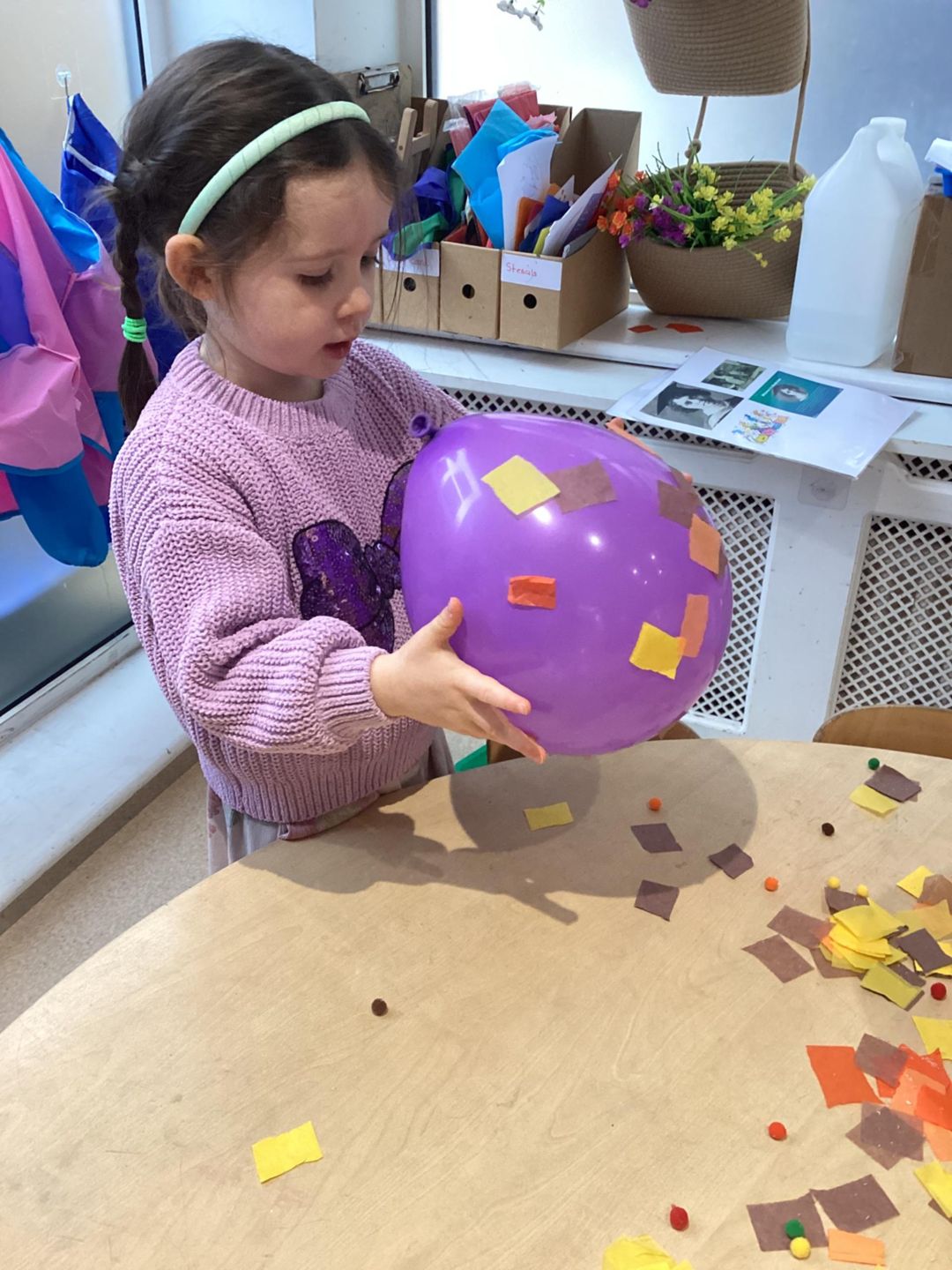
We kicked off our scientific adventure with a magical balloon experiment! The Blazes explored the fascinating world of friction and static electricity. We discovered that when two surfaces rub together, friction is created, and this can cause an electrical charge to build up. This is known as static electricity.
We rubbed our hands together and noticed how they gradually became warmer. We discussed how friction creates heat and explored how rubbing a balloon against certain materials can build up a static charge, allowing it to attract small objects or even make our hair stand up! The children were fascinated by how something so simple could create such exciting results.
Colour Transportation
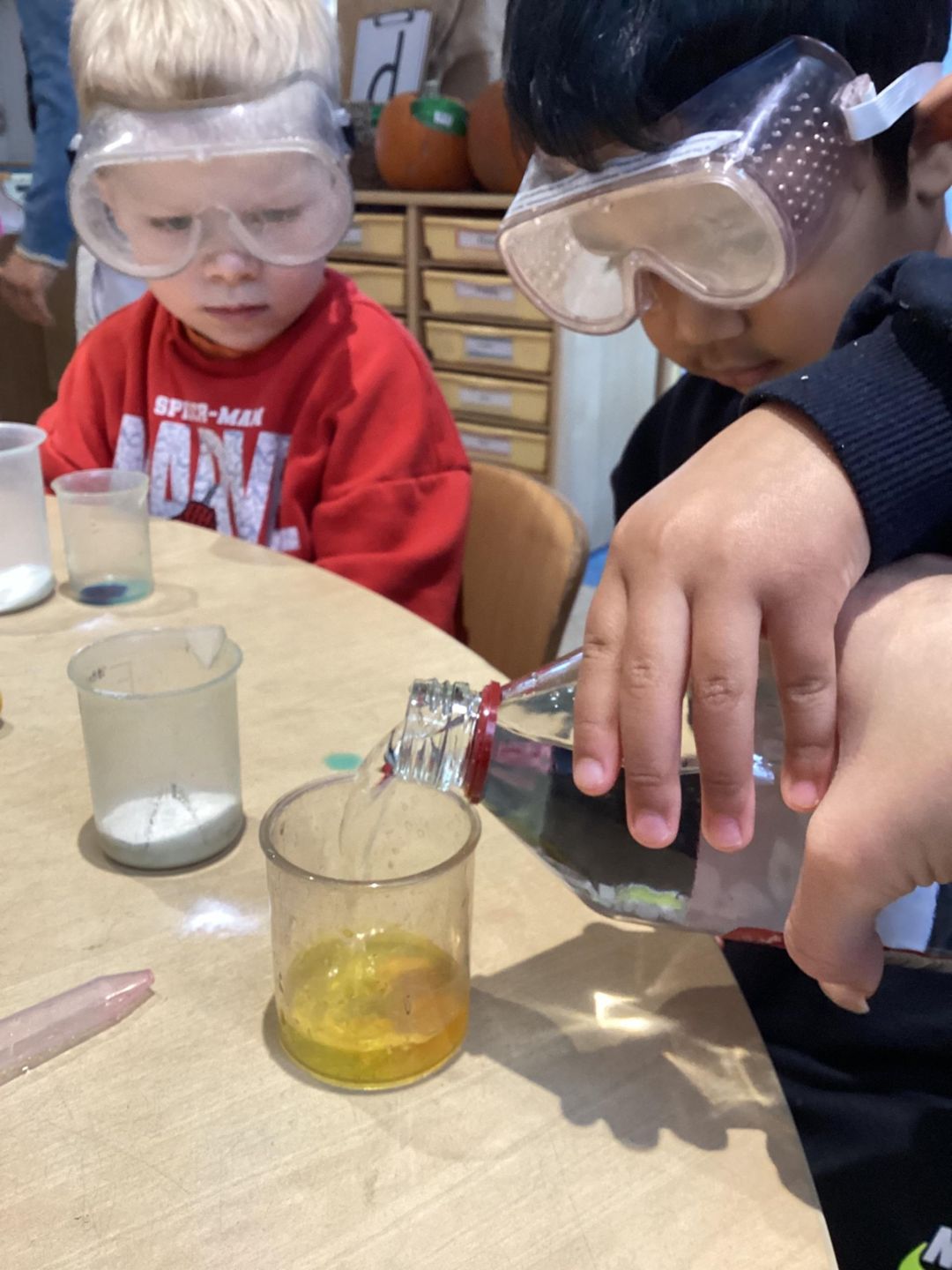
Next, we explored the wonderful world of colour with our colour transportation experiment. We filled our pots with coloured water and watched carefully as the colours slowly travelled from one pot to another.
The Blazes observed how the water moved along the connecting material through a process called capillary action. We discussed how the water travelled, what might happen when different colours met and how we could use our observations to explain what was happening. It was wonderful to see the children watching so closely, sharing their ideas and eagerly anticipating the results!
Volcano Eruptions!
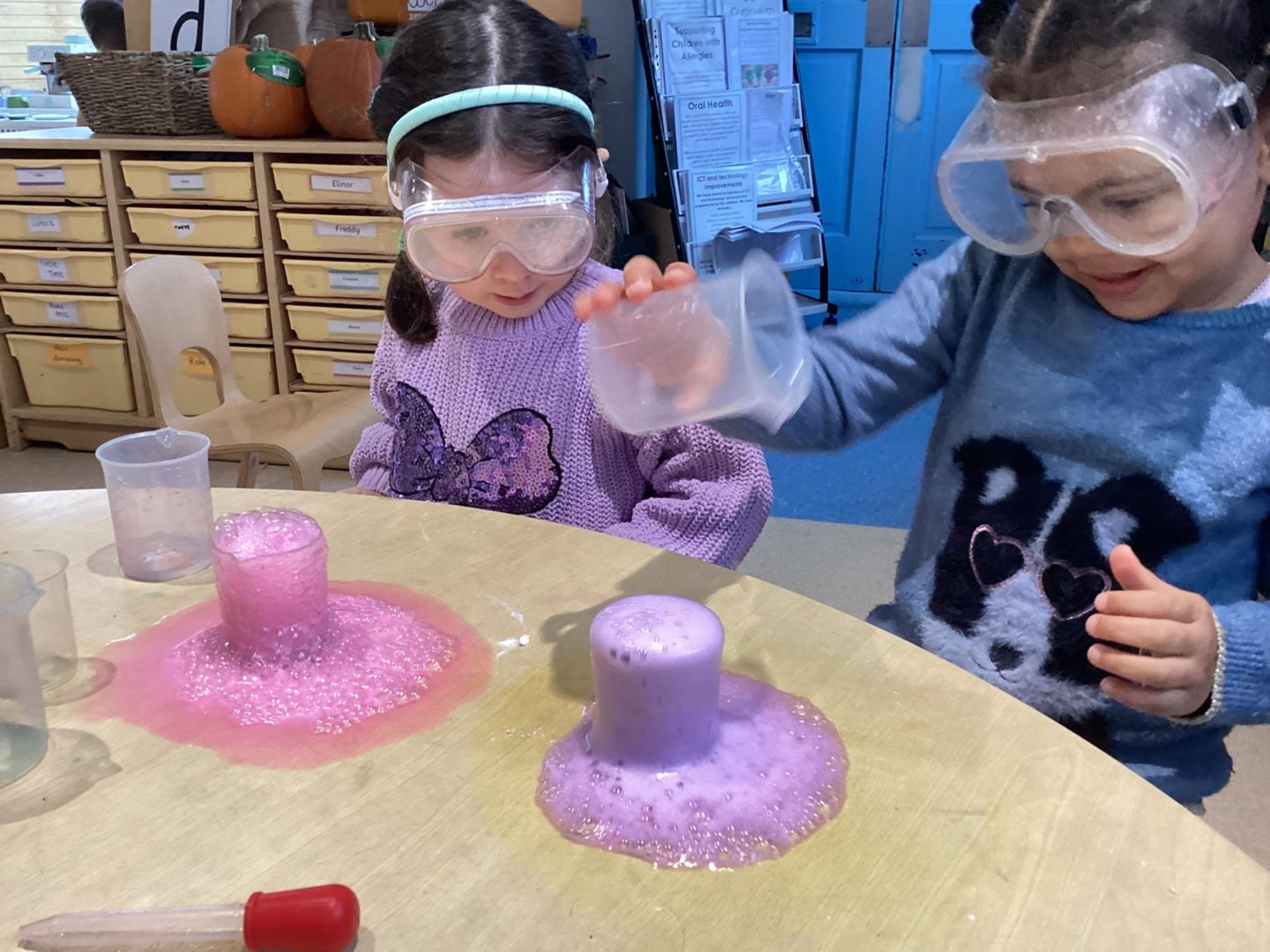
Things really started to fizz and bubble when we created our very own volcanoes! The Blazes carefully added their ingredients to their pots and watched in excitement as their mixtures began to bubble, fizz and erupt.
We explored the science behind the reaction, discussing how the ingredients interacted to produce carbon dioxide gas, creating the bubbling and foaming effect. We also used our senses to investigate what was happening. What colours could we see? What sounds could we hear? What smells could we notice?
The children were encouraged to describe their observations, compare their volcanoes and think about why the reaction occurred. There were plenty of excited faces as we watched our mini eruptions come to life!
Colour Mixing and Scientific Equations
Our next experiment brought out our creative side as we investigated colour mixing. The Blazes explored the three primary colours — red, yellow and blue — and learned how combining them can create new colours.
We completed colour-mixing equations and made predictions about the results before combining our colours to see if our ideas were correct. We discovered that red and yellow make orange, yellow and blue make green, and blue and red make purple.
The children enjoyed experimenting with different combinations, observing the changes and discussing how one colour could transform into another. It was a fantastic opportunity to develop our problem-solving skills while having lots of colourful fun!
Blast Off! Our Balloon Rocket Experiment
In the afternoon, we were ready for take-off with our exciting balloon rocket experiment! Using the air escaping from a balloon, we watched our rockets travel across the room.
We explored how the air rushing out of the balloon pushed it in the opposite direction, helping our rocket move forwards. This introduced us to the scientific idea of action and reaction.
Throughout the experiment, the Blazes became fantastic little investigators, asking questions, sharing ideas and thinking critically about how we could improve our results. We asked questions such as:
- What do you think will happen when we release the balloon?
- Why does the balloon move in the opposite direction to the escaping air?
- What might happen if we put more air into the balloon?
- Would our rocket travel further if we changed the length of the string?
- How could we make our rocket travel faster or further?
- What do you think would happen if we changed the size or shape of the balloon?
- How could we make sure our experiment was a fair test?
The children loved making predictions, testing their ideas and thinking about what they could change to make their rockets work even better. It was wonderful to see their curiosity, teamwork and enthusiasm for problem-solving take flight!
Sink or Float?
To finish our action-packed day, we became investigators once again with our sink-or-float challenge!
The Blazes searched around the room to collect a variety of objects that sparked their curiosity. Before testing each item, we took a vote and made our own predictions about whether we thought it would sink or float. Everyone had the opportunity to share their opinions and explain the reasons behind their choices.
We considered a range of scientific factors, including the object's size, weight, shape and the material it was made from. We also discussed how hollow spaces, trapped air and an object's density can affect whether it sinks or floats. We explored the idea that a large object does not always sink and that a small object does not always float!
One by one, we carefully placed our objects into the water and observed what happened. We recorded our results and compared them with our original predictions. Afterwards, we discussed why we thought each object had behaved in that way and whether any of our results surprised us.
This experiment encouraged the Blazes to think like real scientists by making predictions, testing ideas, observing outcomes and using evidence to explain their discoveries.